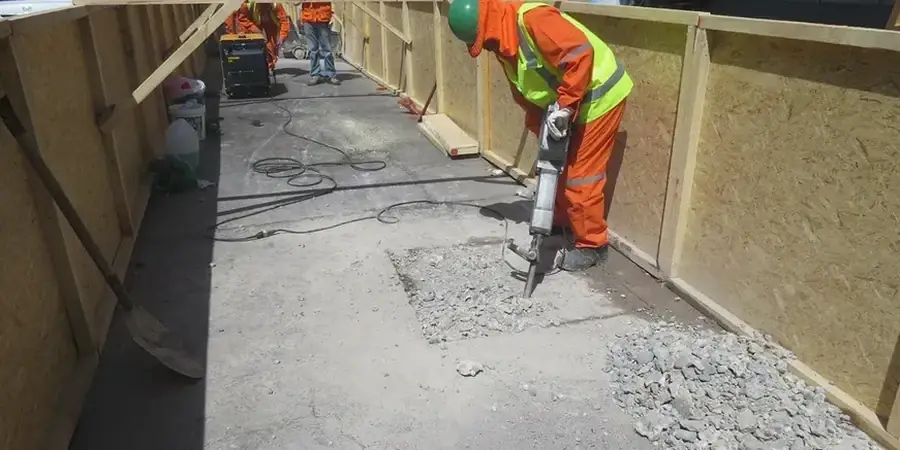
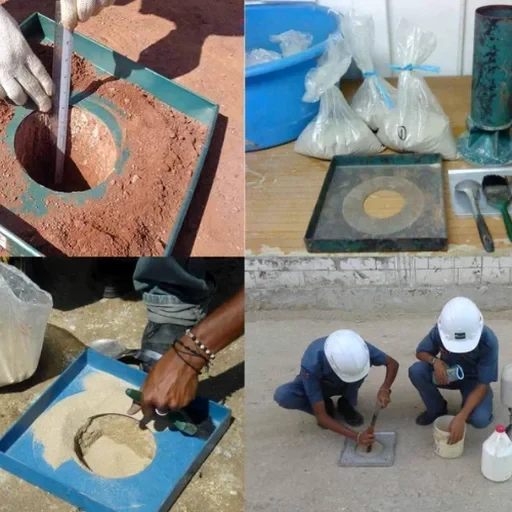
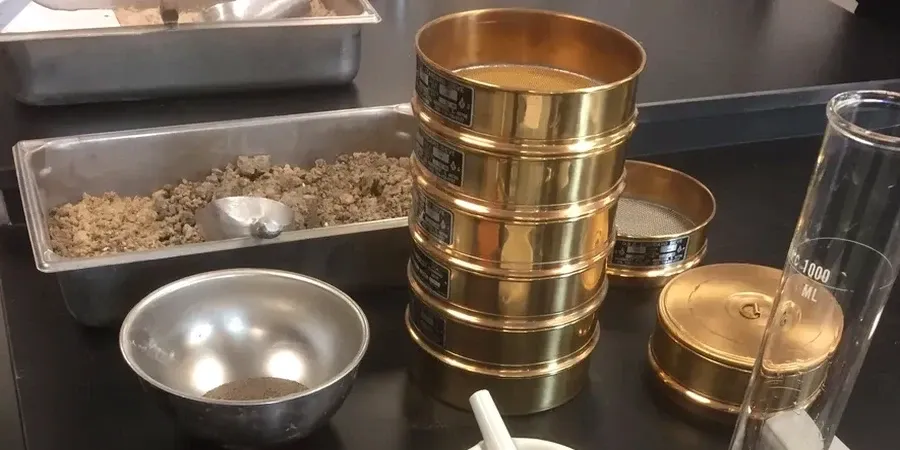
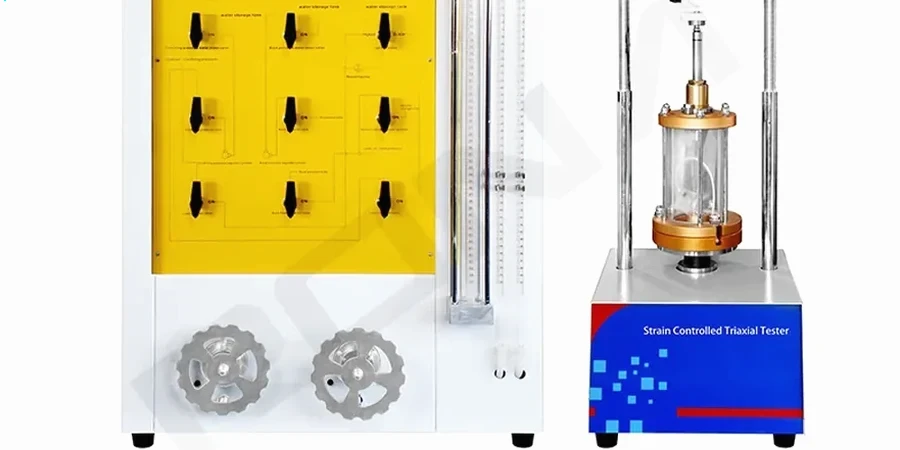
The ground beneath Little Rock changes fast once you cross the Arkansas River. Downtown sits on stiff, overconsolidated shale of the Jackfork Formation that rings under a hammer drill, while neighborhoods west of I-430 spread over older terrace deposits where the clay can be 20 feet thick and slickensided from seasonal wet-dry cycles. That contrast means a standard penetration test only tells part of the story. What the structural engineer really needs for a mat foundation behind the State Capitol or a retaining wall along Cantrell Road is a direct measurement of drained friction angle and cohesion from a triaxial test. The Atterberg limits help flag the problem clays, but the triaxial cell gives us the stress-strain curve up to failure under confinement that matches the proposed footing depth.
Three specimens taken to failure under different cell pressures give the engineer a failure envelope, not just a number — that matters when Little Rock's fissured clays control the design.