GEOTECHNICAL ENGINEERING
LITTLE ROCK
HomeFoundationsRaft/mat foundation design

Raft and Mat Foundation Design in Little Rock, AR

Technical studies that support your project.

LEARN MORE

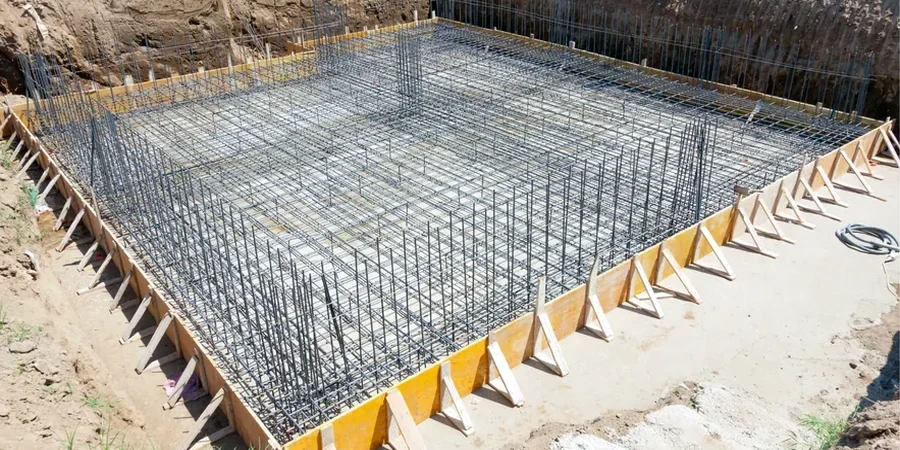
Little Rock's expansion from Quapaw treaty lands to a modern metro area brought construction onto the Arkansas River floodplain. Developers quickly learned that standard footings sink in these deep alluvial deposits. The river laid down 20 to 40 feet of soft clay and loose sand across downtown and the riverfront. That geology demands a different approach. A raft or mat foundation spreads structural loads across a wide concrete slab. It bypasses the weak upper layers. No deep excavation. No extensive piles for moderately loaded buildings. Our team has designed mat foundations for commercial projects from the River Market District to the expanding suburbs in West Little Rock. We rely on in-situ permeability data to model how groundwater moves beneath the slab, which matters a lot in a city where the water table sits just 8 to 15 feet below grade along the river corridor.

A properly designed mat foundation in Little Rock's alluvial soils eliminates differential settlement risk, turning a variable floodplain into a predictable building platform.
Our service areas

Process and scope

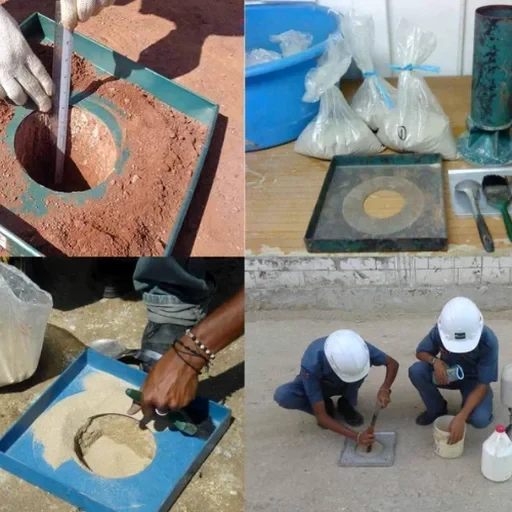
The Arkansas River Valley soils in Little Rock classify predominantly as fat clays (CH) and silty sands (SM) per ASTM D2487. Plasticity indices often exceed 25 in the floodplain clays. That means high shrink-swell potential during Arkansas's wet-dry seasonal cycles. A mat foundation design addresses this by creating a rigid platform that moves uniformly with soil volume changes. Reinforcement detailing follows ACI 318 guidelines. Slab thickness typically runs 18 to 36 inches for mid-rise structures. We determine the exact depth through bearing capacity analysis and settlement modeling. The design integrates closely with plate load test results from the actual building pad. Running a field load test on the prepared subgrade gives us a direct modulus of subgrade reaction. That number feeds straight into the finite element model. No assumptions. No generic textbook values. We also specify underslab drainage where the groundwater surface is within 10 feet of the bottom of excavation.
Raft and Mat Foundation Design in Little Rock, AR
Technical reference — Little Rock

Local considerations

Summer thunderstorms in Little Rock saturate the upper clay crust in hours. Fall dry spells then desiccate it. That cycle creates a hidden risk for conventionally founded buildings: edge curling and differential heave. A mat foundation neutralizes this by bridging over localized soft spots. The bigger threat is the New Madrid Seismic Zone 130 miles to the northeast. Little Rock sits on IBC Site Class D and E soils. These soft deposits amplify long-period ground motion during a seismic event. A mat foundation design for Little Rock must include a seismic soil-structure interaction check. We model the slab stiffness against the anticipated spectral acceleration from ASCE 7-22. Where the alluvium exceeds 30 feet in depth, we often recommend ground improvement beneath the mat. Combining the mat with stone columns creates a composite system that stiffens the soil mass and provides drainage relief during flood season.

Need a geotechnical assessment?

Reply within 24h.

Email: [email protected]

Video resource

Regulatory framework

ASCE 7-22 Minimum Design Loads, IBC 2021 Chapter 18 Soils and Foundations, ACI 318-19 Building Code for Structural Concrete, ASTM D2487 Soil Classification, ASTM D1586 Standard Penetration Test

Technical parameters

ParameterTypical value
Design standardASCE 7-22, IBC 2021
Soil classificationASTM D2487 (CH, SM, CL)
Bearing pressure range1,500 to 3,000 psf
Typical slab depth18 to 36 inches
Subgrade modulus (k)50 to 150 pci
Reinforcement specACI 318 Grade 60
Seismic categoryIBC Site Class D or E

Common questions

What does a mat foundation design cost for a commercial project in Little Rock?

Engineering fees for a mat foundation design on a commercial building in Pulaski County typically fall between US$1,020 and US$4,330. The range depends on the building footprint size, number of soil borings we need to analyze, and whether ground improvement is required. A 5,000-square-foot slab on moderately stiff alluvium costs less than a 20,000-square-foot mat over deep soft clay that requires stone columns. We provide a fixed-fee proposal after reviewing the geotechnical report.

How deep does the mat need to be for Arkansas River floodplain soils?

Depth depends on the plasticity index of the clay and the structural loads. In Little Rock's riverfront alluvium, we typically specify 18 to 36 inches of reinforced concrete. The design must place the bottom of the mat below the active zone of seasonal moisture fluctuation. In Pulaski County, that active zone extends about 8 to 12 feet below grade. A deeper excavation with a compacted fill lift often solves the problem without needing piles.

Do I need a mat foundation or will footings work?

Footings work when the bearing stratum is consistent and the structure is lightly loaded. Many Little Rock sites have 20 feet or more of soft clay with no competent layer within reach of shallow footings. If your geotechnical report shows N-values below 8 in the upper 15 feet, a mat foundation usually makes more economic sense than deep foundations. The mat distributes load and eliminates the need for individual footing inspections across the entire footprint.

How does the New Madrid seismic zone affect the design?

The New Madrid Seismic Zone subjects Little Rock to long-period ground motion that soft alluvial soils amplify. We design the mat for the spectral accelerations mapped in ASCE 7-22 for Site Class D or E conditions. This includes checking the mat's rigidity against seismic overturning moments and ensuring the reinforcement can handle the cyclic curvature demands. We also evaluate liquefaction potential in the loose sand layers common beneath the river valley clays.

Location and service area

We serve projects in Little Rock and surrounding areas.

View larger map