GEOTECHNICAL ENGINEERING
LITTLE ROCK
HomeUnderground ExcavationsGeotechnical design of deep excavations

Geotechnical Design for Deep Excavations in Little Rock

Technical studies that support your project.

LEARN MORE

Little Rock’s growth from a riverside trading post to a capital city means a lot of downtown construction happens on historic alluvial terraces. The soils here aren't just textbook profiles; they shift between lean clays, sandy silts, and weathered shale depending on how close you are to the Arkansas River. A deep excavation for a new parking garage or a hospital expansion can expose these transitions within a single cut, which is where standard prescriptive shoring often falls short. Our approach to geotechnical design of deep excavations ties site-specific parameters from in-situ permeability testing directly into the lateral earth pressure models. The engineering challenge isn't just holding the walls; it's managing groundwater migration through stratified deposits while preserving adjacent historic structures, many of which are on shallow footings.

In Little Rock, the most dangerous assumption is that the shale will behave like rock; it often acts more like a stiff, fissured clay when unloaded.
Our service areas

Process and scope

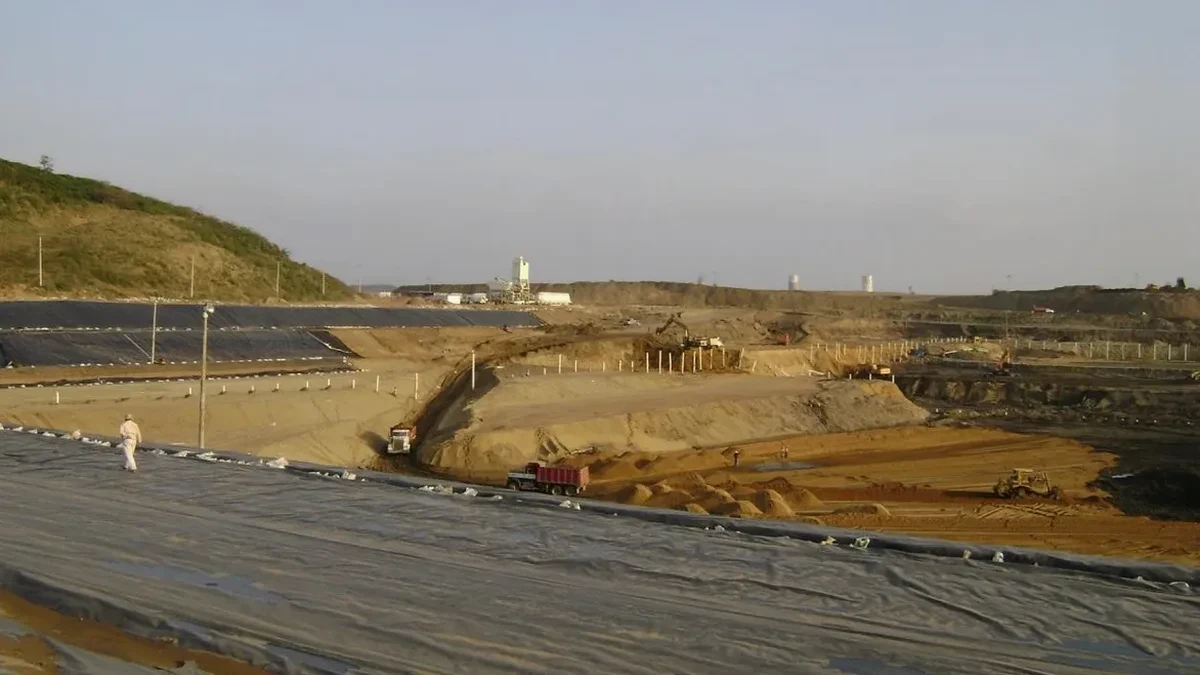
We recently worked on a site near the River Market District where a 30-foot excavation had to go in tight against a century-old brick warehouse. The owner wanted to maximize the building footprint, leaving almost no bench room. We designed a soldier pile and lagging system with tieback anchors, but the real trick was the shale contact dipping across the corner of the site. The upper alluvium drained fine, but water perched on the shale created a slip plane. By running a quick slope stability back-analysis with the perched water factored in, we adjusted the anchor bond lengths and added horizontal drains to bleed the pressure. The excavation stayed dry and the adjacent building didn't settle. That kind of adjustment comes from understanding Little Rock’s geology, not just plugging numbers into software. Every excavation design we produce follows IBC Chapter 18 and local amendments, with internal bracing or rakers sized for the actual soil-structure interaction we measure on site.
Geotechnical Design for Deep Excavations in Little Rock
Technical reference — Little Rock

Local considerations

Arkansas weather doesn't compromise: you get intense spring storms followed by dry summer heat, and that shrink-swell cycle wreaks havoc on exposed clay faces. In a deep excavation, a desiccated crust can crack and lose apparent cohesion, turning a stable slope into a raveling hazard within days. The bigger hidden risk is the Jackson Group shale that underlies much of central Little Rock. It's notorious for slaking when exposed to air and water, which means a perfectly sound excavation base can degrade to mush if left unprotected through a single rain event. We require shotcrete facing or heavy plastic sheeting on shale cuts as standard practice, and our designs always specify a protection slab shortly after reaching subgrade. Skipping these steps because the bid looked tight is the fastest way to a lost excavation bottom and a schedule disaster.

Need a geotechnical assessment?

Reply within 24h.

Email: [email protected]

Video resource

Regulatory framework

IBC 2021 (with Arkansas amendments), ASCE 7-22 Minimum Design Loads, ASTM D2487 Soil Classification, OSHA Subpart P (Excavation Standard), FHWA Geotechnical Engineering Circular No. 4 for ground anchors

Technical parameters

ParameterTypical value
Maximum excavation depth analyzedUp to 80 ft (with internal bracing)
Design methodologyLimit equilibrium + numerical (FEM) for wall deflections
Typical wall systems consideredSoldier pile & lagging, secant piles, diaphragm walls
Groundwater control measuresDeep wells, wellpoints, or permanent underdrains
Seismic load combinationASCE 7-22 Section 12 with site-specific PGA
Monitoring parametersInclinometers, optical surveys, and piezometers
Serviceability limit for adjacent buildingsAngular distortion < 1/500 per IBC

Common questions

What do geotechnical design services for a deep excavation in Little Rock typically cost?

For a full design package including earth retention system design, dewatering analysis, and construction-phase support, budgets in the Little Rock area generally fall between US$1,800 for a small, straightforward cut with cantilever walls, and up to US$9,120 for a complex multi-level braced excavation with tiebacks and extensive groundwater control. The final cost depends on excavation depth, proximity to adjacent structures, and whether a numerical analysis with PLAXIS or similar FEM software is required.

What's the timeline for a deep excavation design package?

A typical design package for a 25- to 40-foot excavation in Little Rock takes about three to four weeks from receiving a complete geotechnical report. That includes preliminary wall selection, lateral earth pressure calculations, structural sizing of soldier piles or secant piles, and preparation of construction drawings and specifications. More complex projects involving 3D finite element modeling or coordination with an underpinning contractor may extend the schedule by one to two weeks.

Do you provide construction observation during excavation?

Yes, we offer periodic observation visits during critical phases: initial excavation, tieback installation and testing, and final subgrade inspection. We review the contractor's submittals, check that installed anchors meet the lock-off load specified in the design, and can adjust the support system if field conditions differ from the geotechnical baseline report. Having the designer on site during the first lift of excavation catches a lot of problems before they become expensive.

Location and service area

We serve projects in Little Rock and surrounding areas.

View larger map