GEOTECHNICAL ENGINEERING
LITTLE ROCK
HomeIn-Situ TestingField permeability test (Lefranc/Lugeon)

Field Permeability Testing (Lefranc/Lugeon) in Little Rock

Technical studies that support your project.

LEARN MORE

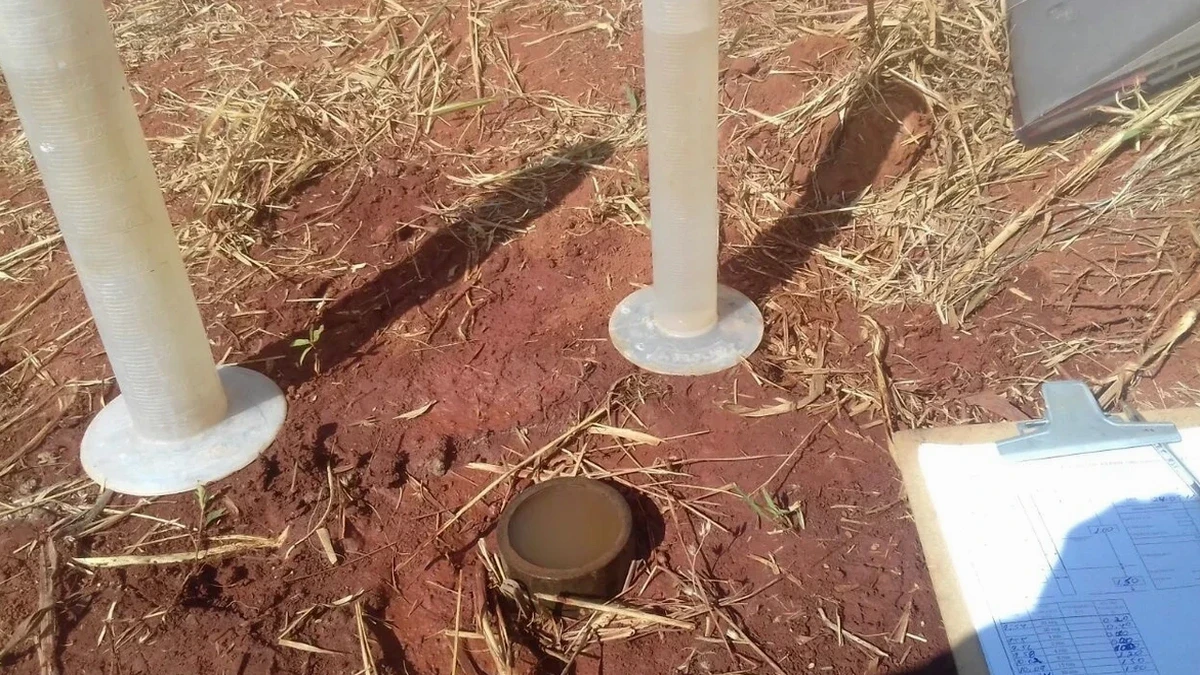
A contractor called us last year from a site near the Arkansas River in downtown Little Rock. They hit groundwater at 12 feet during a deep excavation for a new parking structure. The dewatering plan was failing. Why? The soil report assumed a generic permeability value from a textbook. No one had run an in-situ test. We mobilized within 48 hours and ran a series of Lefranc tests in the alluvial sands. The actual k-value was three times higher than assumed. That data changed the pump sizing overnight. In Little Rock, where the geology shifts from stiff shale to river terrace deposits within a block, a field permeability test is not a checkbox. It is the difference between a dry excavation and a flooded pit. Our team runs both Lefranc and Lugeon tests depending on the formation, always following ASTM D6391 for the packer setup.

A single Lugeon test in fractured Jackfork Sandstone can reveal a hydraulic conductivity 100 times greater than what a lab test on an intact core suggests.
Our service areas

Process and scope

Little Rock sits at roughly 335 feet above sea level, straddling the boundary between the Ouachita Mountains and the Gulf Coastal Plain. This means the subsurface can transition from weathered Jackfork Sandstone to unconsolidated alluvium across a single property. A standard lab permeability test on a small sample misses the macro-features: joints, root casts, gravel lenses. We see this often. A developer gets a lab result of 1x10^-6 cm/s and designs a retention pond. The pond leaks in three months. We come in with a Lugeon test in the bedrock and find open fractures delivering 20 Lugeons. That is a completely different hydraulic regime. For granular soils above the water table, the Lefranc constant-head method gives us direct k-values we can plug straight into a dewatering model. No empirical correlations. No guesswork. Just site-specific data from the formation itself.
Field Permeability Testing (Lefranc/Lugeon) in Little Rock
Technical reference — Little Rock

Local considerations

In Little Rock, we see a recurring problem with projects along the Arkansas River levee system. The USACE requires accurate seepage analysis for any structure within 1,500 feet of the levee. If you submit a design based on assumed permeability, the review board will reject it. We have seen this delay projects by months. The Jackfork Sandstone in the western part of the city is notoriously anisotropic. A vertical borehole might show low permeability. But a horizontal fracture set can transmit water laterally into a basement excavation. A Lugeon test with a double packer isolates these intervals. We can map exactly which fracture is conducting water. Another risk is in the floodplain deposits east of downtown. These contain interbedded silt and sand lenses. A Lefranc test at a single depth is not enough. You need a profile of k-values with depth to design a reliable dewatering system. Skipping this step leads to unstable trench walls and soil piping.

Need a geotechnical assessment?

Reply within 24h.

Email: [email protected]

Regulatory framework

ASTM D6391 - Field Permeability in Boreholes, ASTM D4630 - Permeability of Rock by Lugeon Method, IBC 2021 Section 1803 (Geotechnical Investigations)

Technical parameters

ParameterTypical value
Test Standard (Lefranc)ASTM D6391 (Granular Soils)
Test Standard (Lugeon)ASTM D4630 (Rock Mass)
Measured Range (k)1x10^-7 to 1x10^-1 cm/s
Borehole DiameterNX to HQ (3-4 inches typical)
Packer TypeSingle or Double Pneumatic
Test Interval3 to 6 feet standard
ReportingPermeability (cm/s) or Lugeon units

Common questions

What is the price range for a field permeability test in Little Rock?

For a single Lefranc or Lugeon test performed within a standard borehole, the cost typically ranges from US$700 to US$1,120. The total project cost depends on how many test intervals you need and the depth of the borehole. A complete profile with multiple packer settings will be at the higher end.

When should I choose a Lugeon test over a Lefranc test?

Use a Lugeon test when you are drilling into bedrock, especially fractured sandstone, shale, or limestone. The Lugeon test uses a packer to isolate a section of the rock and measures water loss under pressure. Use a Lefranc test in soils or very soft, weathered rock where you can maintain an open borehole without casing.

How long does a typical permeability test take on site?

A single test interval usually takes 45 to 90 minutes to complete, including the time for the water level to stabilize. If we are testing multiple intervals down a single borehole, we can generally finish 3 to 4 tests in a standard working day.

Location and service area

We serve projects in Little Rock and surrounding areas.

View larger map