GEOTECHNICAL ENGINEERING
LITTLE ROCK
HomeFoundationsPile foundation design

Pile Foundation Design in Little Rock: Engineering for Expansive Clay and Seismic Demands

Technical studies that support your project.

LEARN MORE

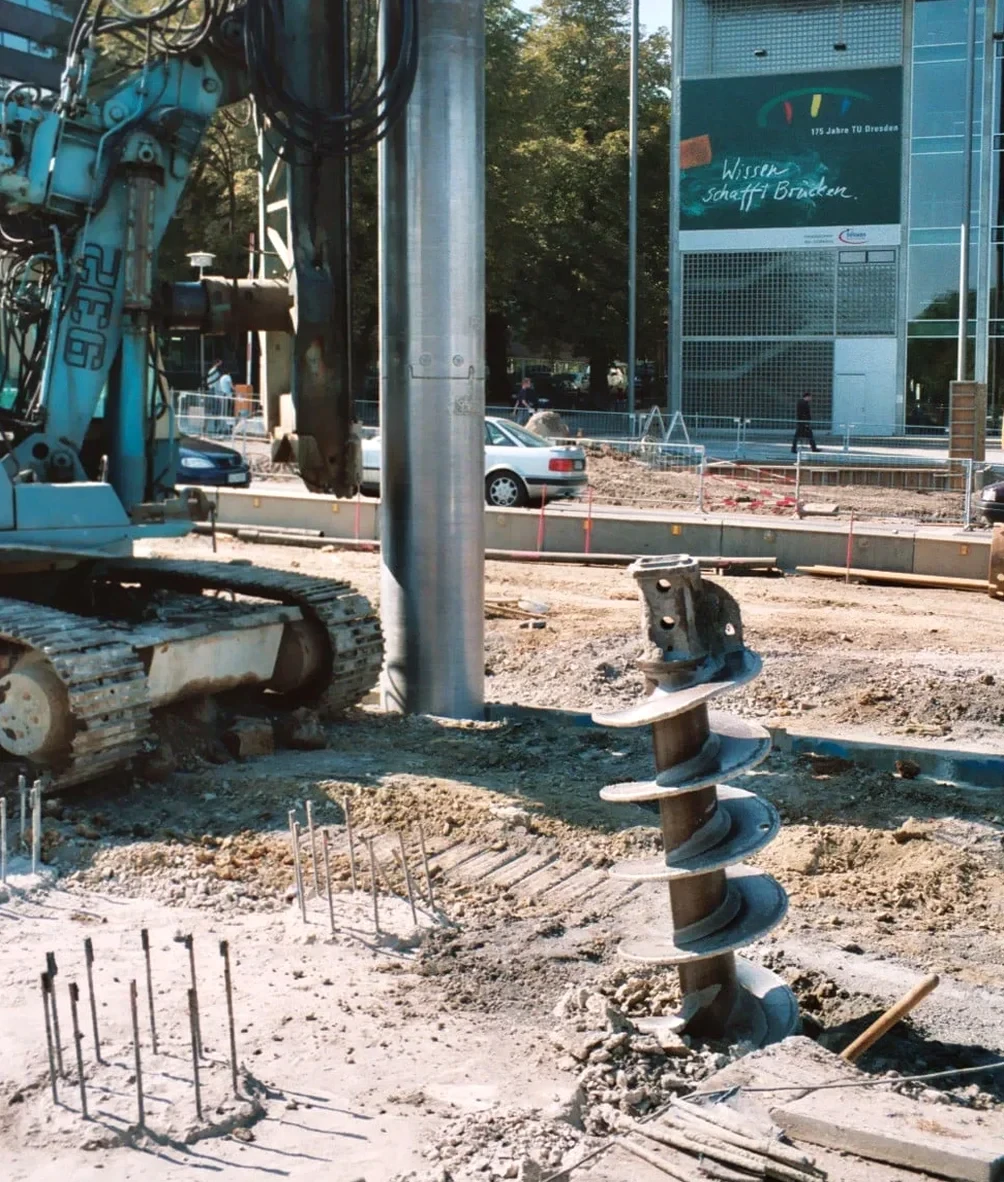
A six-story mixed-use project near the Arkansas River in downtown Little Rock recently faced a familiar problem: stiff, slickensided clay at just 8 feet below grade, with groundwater seeping in at 15 feet. Shallow footings would have been a gamble in those conditions. That’s the reality across much of Pulaski County—expansive soils, variable water tables, and the ever-present need to factor in seismic demand per ASCE 7-22. Our pile foundation design approach for Little Rock starts with a thorough look at the site stratigraphy, then moves directly into axial capacity, settlement, and lateral response analysis. We don’t guess at skin friction values; we back them up with site-specific data, often combining SPT drilling results with laboratory index testing to calibrate design parameters. In a city where the geology shifts block by block, a generic pile design won’t cut it.

Stiff clay in Little Rock can look deceptively competent during a dry summer, but seasonal moisture swings underneath a pile cap change everything about long-term settlement.
Our service areas

Process and scope

Little Rock’s development history mirrors the geology that makes deep foundations a recurring necessity. The city sits at the boundary between the Ouachita Mountains and the Mississippi Alluvial Plain, meaning you can find weathered shale on one side of Cantrell Road and 40 feet of soft alluvium on the other. This patchwork demands a pile foundation design that adapts to rapid changes in bearing stratum depth. Our methodology follows the IBC 2021 deep foundation provisions, checking end-bearing on bedrock or dense sand, negative skin friction from consolidating fills, and group efficiency for closely spaced piles. In the softer deposits near the Arkansas River bottoms, we often compare driven pile and drilled shaft scenarios to find the balance between constructability and cost. A CPT test profile can help pinpoint the transition from soft clay to competent bearing material without the sample disturbance that sometimes skews SPT blow counts in partially saturated zones.
Pile Foundation Design in Little Rock: Engineering for Expansive Clay and Seismic Demands
Technical reference — Little Rock

Local considerations

The biggest geotechnical wildcard in Little Rock is the expansive potential of the local clays. The Jackson Group and Wilcox Formation soils that underlie much of the city exhibit moderate to high plasticity, with liquid limits routinely exceeding 50. When these clays get wet—especially after the heavy spring rains central Arkansas sees—they swell and lose shear strength; when they dry during the late summer, they shrink and can pull away from pile shafts. A pile foundation design that ignores this seasonal cycle risks downdrag loads that weren’t accounted for in the structural model. Add in a design earthquake from the New Madrid seismic zone, and the liquefaction susceptibility of loose alluvial sands near the river becomes another variable we can’t overlook. Screw piles or short driven piles that terminate in liquefiable layers are a non-starter.

Need a geotechnical assessment?

Reply within 24h.

Email: [email protected]

Video resource

Regulatory framework

IBC 2021 (International Building Code) Chapter 18: Soils and Foundations, ASCE 7-22 Minimum Design Loads and Associated Criteria for Buildings and Other Structures, ASTM D4945 Standard Test Method for High-Strain Dynamic Testing of Deep Foundations, AASHTO LRFD Bridge Design Specifications, Section 10: Foundations, FHWA-NHI-16-009/010 Drilled Shafts and Driven Pile Design Manuals

Technical parameters

ParameterTypical value
Design reference standardIBC 2021 / ASCE 7-22 Chapter 18
Seismic Site Class range (typical)C, D, or E depending on depth to rock
Pile types commonly analyzedDriven H-piles, prestressed concrete, drilled shafts, micropiles
Axial capacity verification methodStatic load test, high-strain dynamic testing (PDA), or CAPWAP analysis
Settlement analysis approacht-z curves or equivalent top-load settlement per FHWA guidelines
Lateral load assessmentp-y method (Reese, 1984) / LPILE or GROUP software
Minimum factor of safety (compression)2.0 to 2.5 depending on load test verification per IBC

Common questions

What’s the typical cost range for a pile foundation design package in Little Rock?

For a mid-size commercial or multi-family project in the Little Rock metro, a complete design package—geotechnical report, pile capacity calculations, and construction specifications—generally falls between US$1,640 and US$5,410. The spread depends on the number of borings, whether a load test program is required, and the complexity of the lateral analysis. A simple monopole foundation will be on the lower end; a multi-story building on variable alluvium with group effects and liquefaction checks will push toward the upper end.

How do you account for seismic loads in Little Rock pile design?

We follow ASCE 7-22 seismic provisions, applying the mapped spectral accelerations for the site coordinates. The soil profile determines the Site Class (commonly C, D, or E in Little Rock), which modifies the ground motion. We then check liquefaction susceptibility using SPT- or CPT-based methods (Seed & Idriss, Boulanger & Idriss) and apply reduced soil springs in liquefied layers if necessary. Lateral pile response is modeled with p-y curves, and we verify that pile head deflections stay within the structural tolerance.

Do I need a load test for a pile foundation in Little Rock?

Under IBC 2021, load tests are required unless the design is based on empirical correlations previously calibrated with load test data in similar soil conditions. In the variable geology of central Arkansas, a static load test or high-strain dynamic test with signal matching provides significant value—it can justify a higher resistance factor and often pays for itself through foundation optimization. We help you decide based on the project size and the uncertainty in the geotechnical parameters.

What pile types work best in Little Rock’s soil conditions?

It depends on the depth to competent bearing material. In areas where bedrock is shallow—west of I-430, for example—drilled shafts socketed into shale can be very efficient. In the deeper alluvium near the Arkansas River, driven H-piles or prestressed concrete piles driven to dense sand or gravel are common. Micropiles are a solid option for retrofit projects with low headroom or limited access. We evaluate two or three viable pile types before recommending the most cost-effective solution.

How long does the pile foundation design process take?

A typical timeline from receiving the final geotechnical report to issuing the design package is 2 to 3 weeks for straightforward projects. That includes the axial and lateral analysis, group effect checks, and preparation of construction drawings and specifications. Projects requiring complex 3D group analysis or coordination with a load test program may extend to 4 weeks. We’re used to working with Little Rock structural engineers and can align our deliverables with the overall project schedule.

Location and service area

We serve projects in Little Rock and surrounding areas.

View larger map