GEOTECHNICAL ENGINEERING
LITTLE ROCK
HomeInvestigationCPT (Cone Penetration Test)

CPT Testing in Little Rock — Cone Penetration Data for Central Arkansas Sites

Technical studies that support your project.

LEARN MORE

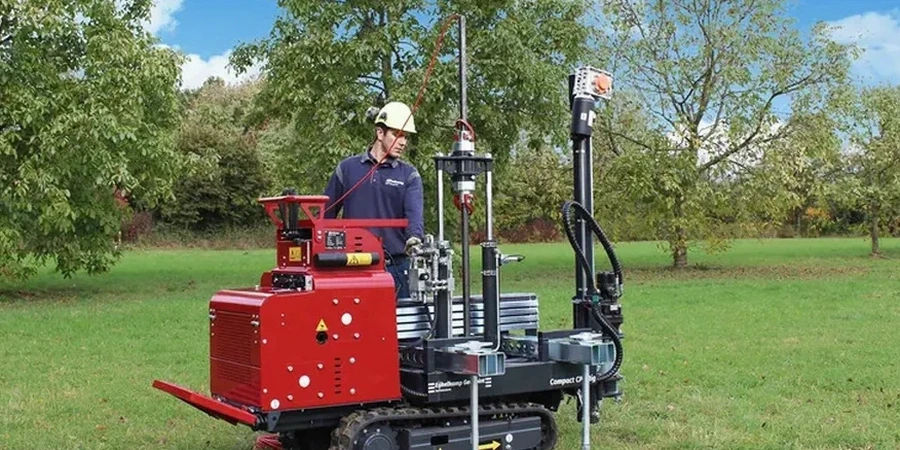
Little Rock sits on a complex stack of terrace deposits, alluvial clays, and weathered shale — and you can’t read that from a boring log alone. The CPT rig pushes a cone into the ground and captures continuous resistance data every centimeter. That’s the difference. We work sites along the Arkansas River floodplain, up through the Maumelle formation, and into the swelling clays of the Wilcox Group. When a standard SPT hammer can’t resolve thin silt seams or a soft zone at 14 feet, the cone does. We run friction sleeve and pore pressure measurements to flag drainage problems before the excavator ever shows up. For deeper investigation in terrace gravels where refusal is expected, we often pair the CPT with SPT drilling to cross-check refusal depths and sample the coarser fraction directly. On commercial lots near the river, we also combine results with liquefaction assessment because the saturated alluvium can lose strength fast under seismic loading. This isn’t lab-only data — it’s in-situ, recorded as the cone advances, and tied to the actual stratigraphy under your footing.

A CPT sounding in Little Rock alluvium can reveal a soft silt seam at 12 feet that a boring log would miss entirely — and that seam controls settlement.
Our service areas

Process and scope

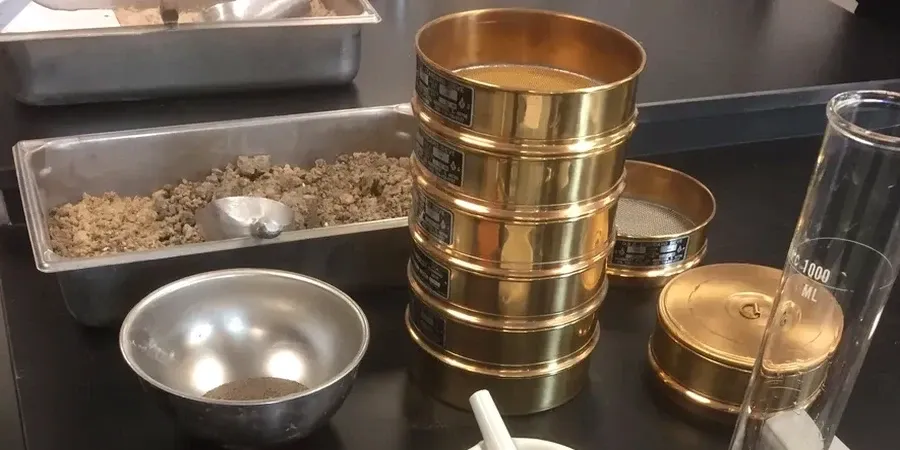
The 2021 IBC with Arkansas amendments and ASCE 7-22 require site-specific soil parameters for any structure over two stories in Little Rock. CPT testing under ASTM D5778 delivers exactly that — tip resistance, sleeve friction, and equilibrium pore pressure in one continuous push. We use 10-ton and 20-ton rigs with 15 cm² cones, pushing at the standard 2 cm/s rate. The data streams live to screen. Friction ratio helps separate the stiff overconsolidated Pleistocene clays from the softer Holocene channel fill, and the soil behavior type chart gives a first-pass classification that we then calibrate against lab results. In the hilly terrain west of Chenal Parkway, we sometimes encounter colluvium over weathered Jackfork sandstone, and the cone picks up the transition clearly before we ever set a sampler. On a recent project near the Port of Little Rock, we combined the CPT profile with grain size analysis on thin-walled tube samples to confirm the silt content in a layer that was triggering an intermediate classification between sand and clay. The result changed the foundation recommendation from shallow footings to a stiffened slab with undercut. Every push is logged with depth encoder, inclination sensor, and zero-shift check on withdrawal.
CPT Testing in Little Rock — Cone Penetration Data for Central Arkansas Sites
Technical reference — Little Rock

Local considerations

Little Rock grew along the river and then pushed west into the hills. That means a lot of the commercial development sits on cut-fill transitions, old terrace scarps, and reworked alluvium. The Arkansas Geological Survey maps show Quaternary alluvium up to 60 feet thick in the downtown corridor, with lenses of loose sand and soft organic clay that don’t announce themselves in a split-spoon sample. CPT catches those. We’ve seen sites where the cone drops from 80 tsf tip resistance into a 3-foot zone of 8 tsf material with no visual warning in the cuttings. That’s where differential settlement starts. In West Little Rock, the Wilcox Group clays can be moderately expansive, and the cone’s pore pressure dissipation test tells us how fast the clay will drain under load — a parameter that’s critical for slab-on-grade design. Skipping a CPT profile in these conditions means the geotech report relies on interpolation between widely spaced borings, and that’s not enough when a soft lens sits right under the elevator core.

Need a geotechnical assessment?

Reply within 24h.

Email: [email protected]

Regulatory framework

ASTM D5778 — Standard Test Method for Electronic Friction Cone and Piezocone Penetration Testing of Soils, ASCE 7-22 — Minimum Design Loads and Associated Criteria for Buildings and Other Structures, 2021 International Building Code with Arkansas amendments (IBC 2021 AR)

Technical parameters

ParameterTypical value
Cone capacity10 to 20 ton (push force)
Cone area15 cm² (standard electronic cone)
Penetration rate2 cm/s ± 10% per ASTM D5778
Measured channelsTip resistance (qc), sleeve friction (fs), pore pressure (u2)
Depth range typicalUp to 80 ft in soft clay; less in gravel refusal
Friction ratioComputed real-time; used for SBT classification
Data interval5 cm continuous logging

Common questions

What does CPT testing cost in Little Rock?

For projects within the Little Rock metro area, CPT soundings typically range from US$160 to US$250 per push depending on depth, rig size, and whether piezocone or seismic modules are needed. Mobilization is quoted separately based on site access and travel distance. A typical two-push profile for a commercial lot runs toward the lower end of that range; deeper SCPTu profiles with multiple dissipation tests trend higher.

How deep can a CPT rig push in Little Rock soils?

Depth depends entirely on soil resistance. In the soft alluvial clays and silts near the river, 60 to 80 feet is achievable. In the terrace deposits with dense gravel stringers or where refusal hits weathered Jackfork sandstone, the push may stop at 25 to 35 feet. We monitor tip resistance and inclination in real time and stop the push if refusal criteria are met to protect the cone and rods.

Is CPT data accepted by Little Rock building officials?

Yes. CPT data collected under ASTM D5778 and interpreted per the IBC and ASCE 7 is standard practice in central Arkansas. We provide the raw data files, soil behavior type logs, and interpreted parameters (undrained shear strength, overconsolidation ratio, equivalent SPT N-values) in a sealed geotechnical report that satisfies plan check requirements for the City of Little Rock and Pulaski County.

Location and service area

We serve projects in Little Rock and surrounding areas.

View larger map