GEOTECHNICAL ENGINEERING
LITTLE ROCK
HomeLaboratoryAtterberg limits

Atterberg Limits Testing for Little Rock Construction Projects

Technical studies that support your project.

LEARN MORE

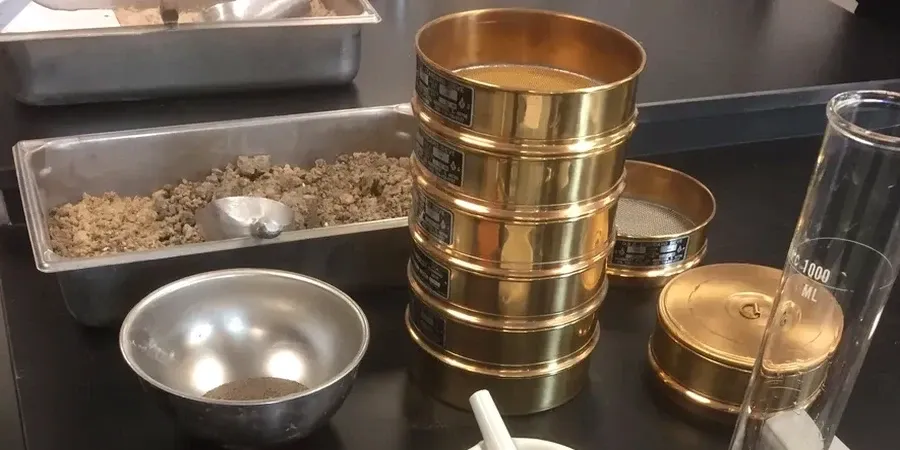
Little Rock sits at roughly 335 feet above sea level, straddling the Arkansas River floodplain and the foothills of the Ouachitas. That position means our projects encounter highly variable fine-grained soils—from fat clays near Fourche Creek to silty deposits along the river terraces. We run Atterberg limits on every cohesive sample that comes through our lab, because plasticity governs shrink-swell behavior, and that behavior dictates foundation performance here. ASTM D4318 gives us the liquid limit and plastic limit, but the real number we watch is the plasticity index. A PI above 25 in a Little Rock subgrade is a red flag. We complement those index tests with a full grain size analysis to quantify the fines fraction, and use the combined data to classify per ASTM D2487.

A plasticity index above 25 in Little Rock alluvium is a clear signal to deepen footings or stabilize the subgrade.
Our service areas

Process and scope

Central Arkansas weather swings from wet winters to dry, hot summers, which creates severe wet-dry cycles in the upper soil profile. The Atterberg limits shift with moisture content, so we test at natural moisture and after oven-drying to see the full range. A sample from the Maumelle area might show a liquid limit of 55 and a plastic limit of 20, yielding a PI of 35—highly expansive by any standard. That same clay will crack pavement and lift shallow footings if not mitigated. We often pair Atterberg results with a CPT test to correlate tip resistance with plasticity index across the site, giving a continuous profile of soil behavior without waiting for multiple lab samples. Our lab follows the multipoint liquid limit method for precision, not the one-point shortcut.

Key characteristics we document in every report:
  • Liquid limit (LL) via Casagrande cup per ASTM D4318
  • Plastic limit (PL) by thread-rolling at 3 mm diameter
  • Plasticity index (PI = LL - PL) for shrink-swell classification
  • Liquidity index to assess in-situ consistency relative to Atterberg boundaries
  • Activity (PI / % clay fraction) to identify mineralogy type—values above 1.2 suggest montmorillonite, common in Arkansas River basin soils
Atterberg Limits Testing for Little Rock Construction Projects
Technical reference — Little Rock

Local considerations

Little Rock's development history follows the river. The downtown core and older neighborhoods like Quapaw Quarter sit on Holocene alluvium—interbedded clays, silts, and sands deposited by the Arkansas River over the last 10,000 years. These deposits are notoriously erratic. A boring that hits stiff clay at 8 feet can encounter soft, plastic clay at 12 feet, just below the planned footing elevation. Skipping Atterberg classification on that lower layer is how you end up with differential settlement and cracked slabs within two years of construction. We have seen projects where the PI jumped from 15 to 42 across a single boring—the difference between a stable lean clay and a high-plasticity fat clay. When the activity number confirms smectite clay minerals, we recommend either over-excavation and replacement or chemical stabilization with lime, which works by reducing the plasticity index through cation exchange. The IBC requires soil classification per ASTM D2487 for foundation design; Atterberg limits are the backbone of that classification for fine-grained soils.

Need a geotechnical assessment?

Reply within 24h.

Email: [email protected]

Video resource

Regulatory framework

ASTM D4318-17e1 (Standard Test Methods for Liquid Limit, Plastic Limit, and Plasticity Index of Soils), ASTM D2487-17e1 (Standard Practice for Classification of Soils for Engineering Purposes — Unified Soil Classification System), IBC 2021 Chapter 18 (Soils and Foundations)

Technical parameters

ParameterTypical value
Liquid limit range for local clays35% to 72%
Plastic limit typical range15% to 28%
Plasticity index critical thresholdPI > 20 (high expansion)
Liquidity index for soft soilsLI > 1.0 indicates sensitive clay
Activity classification boundaryA > 1.2 (active montmorillonite)
Sample mass required (ASTM D4318)150 g passing No. 40 sieve
Standard test methodASTM D4318-17e1

Common questions

How much do Atterberg limits tests cost in Little Rock?

A single Atterberg limits test (liquid limit and plastic limit) runs between US$60 and US$100 per sample. The full soil classification package, which adds grain size distribution and moisture content, is priced separately. Volume discounts apply for projects with more than 10 samples.

What is the difference between liquid limit and plastic limit?

The liquid limit is the water content at which soil transitions from a plastic state to a liquid state—measured by closing a groove in a Casagrande cup at 25 blows. The plastic limit is the water content at which soil crumbles when rolled into a 3 mm thread. The difference between them is the plasticity index. A high PI means the soil remains plastic over a wide moisture range, which indicates high shrink-swell potential.

Which ASTM standard governs Atterberg limits testing?

ASTM D4318-17e1 is the current standard. It specifies the multipoint liquid limit method using the Casagrande percussion cup and the plastic limit by hand-rolling. Our lab also follows ASTM D2487 for soil classification and ASTM D2216 for moisture content determination, which are required inputs for a complete classification report.

Location and service area

We serve projects in Little Rock and surrounding areas.

View larger map