GEOTECHNICAL ENGINEERING
LITTLE ROCK
HomeInvestigationExploratory test pit

Exploratory Test Pits in Little Rock: Subsurface Verification for Site Planning

Technical studies that support your project.

LEARN MORE

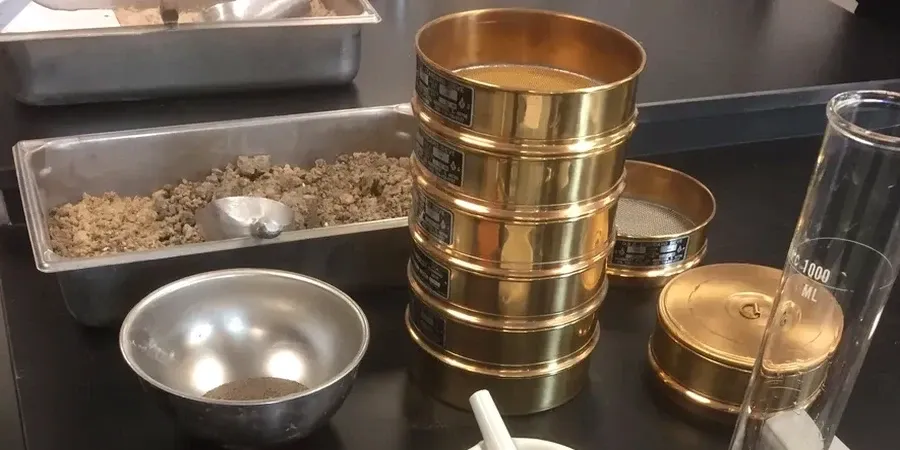
In Little Rock, you learn quickly that the geology shifts block by block—from the shale and sandstone of the Jackfork Formation in the western heights to the deep alluvial silts and clays down in the Fourche Creek bottoms. Before you commit to a foundation design or a cut-and-fill sequence, you need to see the transition zone with your own eyes. That’s where a well-logged exploratory test pit becomes invaluable. Our crew opens trenches and pits across Pulaski County to expose the contact between weathered rock and recent alluvium, giving the design team direct access for sampling and in-situ density checks. For sites where the plasticity of the local clays is a concern, we often pair the pit program with atterberg limits to quantify the shrink-swell potential before the structural engineer even starts detailing.

A test pit shows you the soil structure, not just a bag of cuttings—and in Little Rock’s transitional geology, that’s the difference between a surprise and a plan.
Our service areas

Process and scope

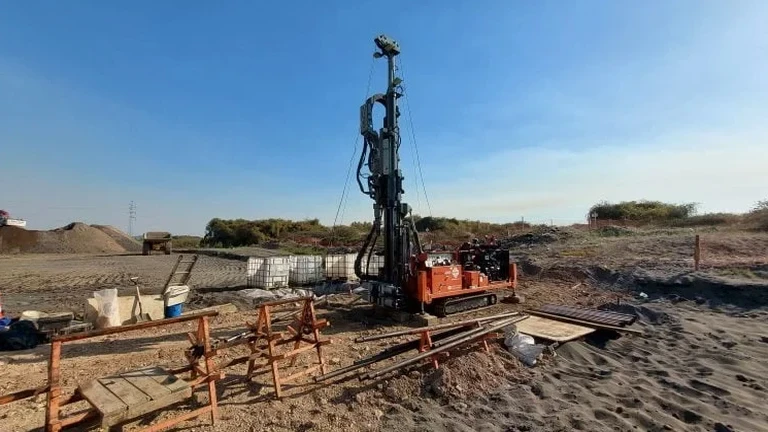
Fieldwork in central Arkansas has to respect the IBC 2021 and the referenced ASCE 7-22 provisions for minimum soil investigation requirements. An exploratory test pit here isn’t just a hole in the ground. We log each stratum using the USCS classification per ASTM D2487, document the moisture profile, and extract undisturbed block samples from the clay seams that give Little Rock contractors so much trouble during the wet season. The real advantage over a boring alone is the continuous lateral exposure—you can trace a thin sand seam or a fracture in the shale across ten linear feet instead of guessing from a two-inch split spoon. When we need to verify the bearing stratum directly beneath a proposed shallow footing, we follow up the pit with a plate load test right at the invert, which gives us a deformation modulus you can actually use in a settlement calculation.
Exploratory Test Pits in Little Rock: Subsurface Verification for Site Planning
Technical reference — Little Rock

Local considerations

Little Rock’s development history left a patchwork of old fill, buried debris, and undocumented utility trenches. In the Quapaw Quarter and older industrial tracts along the Arkansas River, you can dig a pit and find six feet of brick rubble mixed with lean clay before you hit native ground. An exploratory test pit lets you map that anthropogenic layer accurately, giving the earthwork contractor a real quantity takeoff for off-haul or recompaction. If the pit reveals soft, organic silt below the water table, it changes the dewatering strategy completely. Skipping this step can mean foundation concrete poured over compressible fill, and that’s a phone call nobody wants to get two years after the certificate of occupancy is signed.

Need a geotechnical assessment?

Reply within 24h.

Email: [email protected]

Video resource

Regulatory framework

IBC 2021 (Chapter 18), ASCE 7-22 (Section 3.2 Site Investigation), ASTM D2487 (Unified Soil Classification System), ASTM D2488 (Visual-Manual Procedure)

Technical parameters

ParameterTypical value
Maximum excavation depth14 ft (deeper with shoring upon request)
Standard bucket width24 to 36 inches
Sample types recoveredBulk disturbed, block undisturbed, Shelby tube from base
Logging standardASTM D2488 (visual-manual), D2487 for lab correlation
Typical production rate in alluvium3–5 pits per day
Shoring method (if required)Hydraulic speed shores or timber lagging
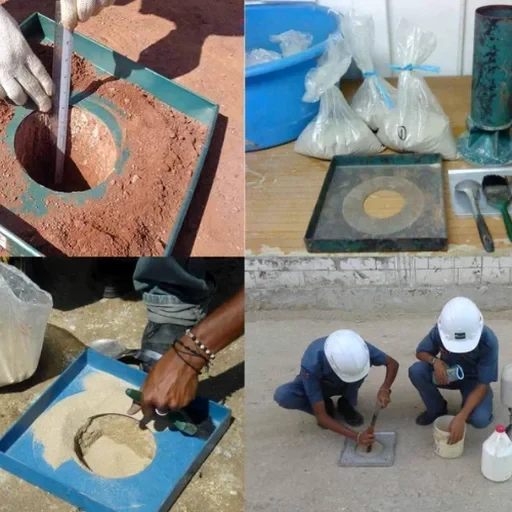
Backfill compaction controlSand cone (ASTM D1556) or nuclear gauge in lifts

Common questions

What does an exploratory test pit cost in the Little Rock area?

For a standard single pit up to 10 feet deep with a full log, bulk sampling, photographs, and compacted backfill, budget between US$470 and US$770 per pit. The range depends on access conditions, shoring requirements, and whether we’re digging through easy alluvium or tough shale with boulders.

How deep can you excavate a test pit, and do you handle shoring?

With a mid-size excavator we routinely reach 14 feet. Beyond that, or when the pit wall stands near-vertical in loose sand, we install hydraulic speed shores or timber lagging. All shoring follows OSHA Subpart P requirements, and we include the shoring design note in the daily field report.

What happens to the pit after you finish logging and sampling?

We backfill in lifts, compacting each lift with a plate compactor or jumping jack. If the owner needs the area restored to grade for immediate construction, we’ll run a sand cone test on the top lift and provide a compaction certificate before demobilizing.

Location and service area

We serve projects in Little Rock and surrounding areas.

View larger map