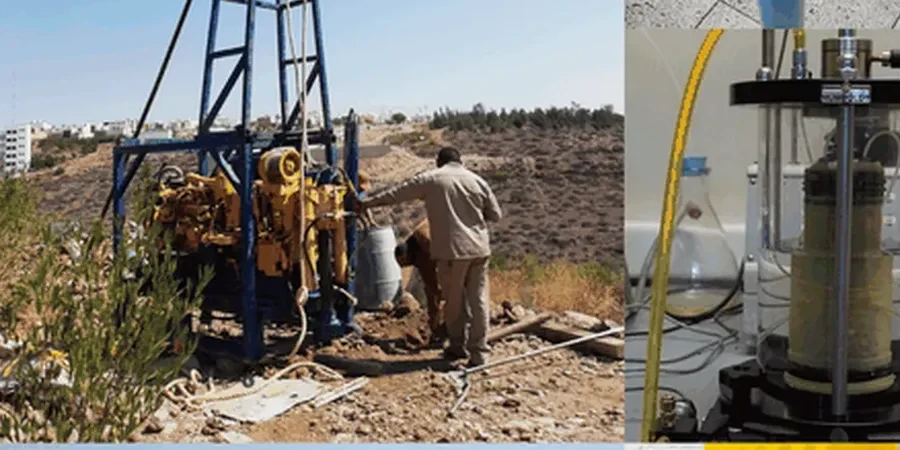
Little Rock sits right on the fall line where the Gulf Coastal Plain meets the Ouachita foothills. That geological boundary creates a real mixed bag of subsurface conditions — weathered shale on the west side, deep alluvial clays along the river, and pockets of loess that erode fast when exposed. Any soil mechanics study here has to account for that variability. You cannot assume what worked in Conway will hold up in Hillcrest or down by the port. The lab runs full classification suites under ASTM D2487 and shear strength tests on undisturbed Shelby tube samples. When the Arkansas River floods, groundwater rises quickly, and that skews both bearing capacity and settlement predictions. A properly scoped soil mechanics study catches those seasonal effects before the structural engineer locks in the foundation design. For deeper profiles in the alluvium, we often pair lab data with field data from CPT testing to map the soft zones precisely, and we pull Atterberg limit results into the slope stability analysis whenever the site has any cut over eight feet.
Expansive clays in west Little Rock have produced swell pressures exceeding 5,000 psf — enough to lift a lightly loaded slab if not designed for.